THE PROCESS OF PRINTMAKING


Monotype and Monoprints:
These are, as their names imply, one-of-a-kind images. A monotype begins with a completely blank plate and is often called “the painterly print” because of the freedom of means inherent in the technique. The artist may paint or roll ink onto the plate, (often plexiglass) and manipulate the ink with various tools, remove ink, add more and also print on the same paper in successive layers. But because there are no permanent marks on the plate, it is not possible for the artist to create multiples. In a monoprint, there are permanent marks on the plate, but the artist adds ink and makes changes to the image to such an extent that the print is unique. The plate is inked in various ways, wiped, and printed. It may go through the press several times, being re-inked to achieve the final result. Sometimes Laurie uses collagraph plates in her monoprints.
Relief Printing:
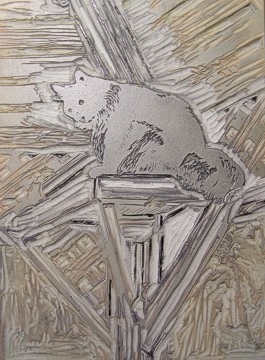
The design is drawn on the piece of linoleum or wood to be used as the printing plate, and the areas not to be printed are cut away. The plate is then inked and run through the press, leaving the inked as an image on the paper. (Mutiple plates may be used on one piece.)
Viscosity Etching Intaglio Printing:
The design is line-etched into the plate and then various areas are bitten by nitric acid to different depths. The ink is applied to the lower levels with a firm piece of cardboard, and then wiped with a tarleton (cheese cloth). Subsequent inks of diffferent viscosities are then applied with rollers. The inks resist one another and create a wide variety of colors that are revealed as the plate and paper are run through the etching press one time. A “ghost,” or lighter print, can be made from the ink remaining on the plate after the first printing.
Collagraph:
A print made from a plate made up of collage items such as cardboard, fabric, wire, carborundum, glue, gesso etc. The plate can be inked as a relief and intaglio and is usually pulled on an etching press.
NOTE ON PAPER:
The choice of paper is important to printmakers. There is great range in weight, texture, durability and color. All will be archival. European papers may need long soaking and hand-made Japanese papers, used often for chine colle, are delicate and often transparent. The choice can affect the look and mood of a print.
My printmaking begins with inspiration--an idea or image that delights or challenges. I determine which medium will best lend itself to the communication of that idea. For line and texture, perhaps a linocut or woodblock. For playing with color, I choose viscosity etching and monotypes. The experimental nature of printmaking is magic.

© Copyright 2010 Laurie Meinke
All rights reserved